








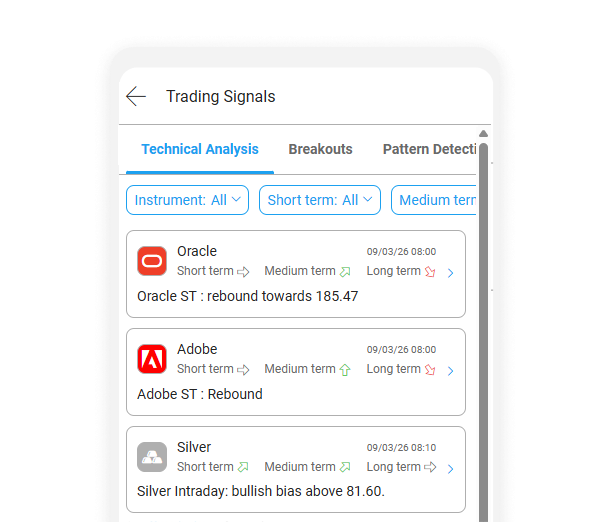
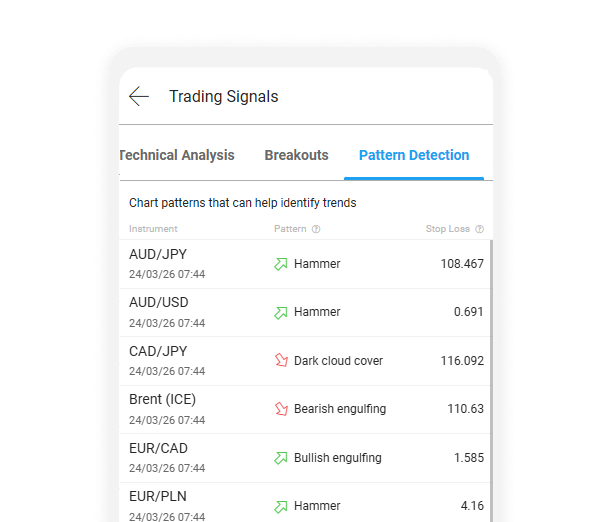
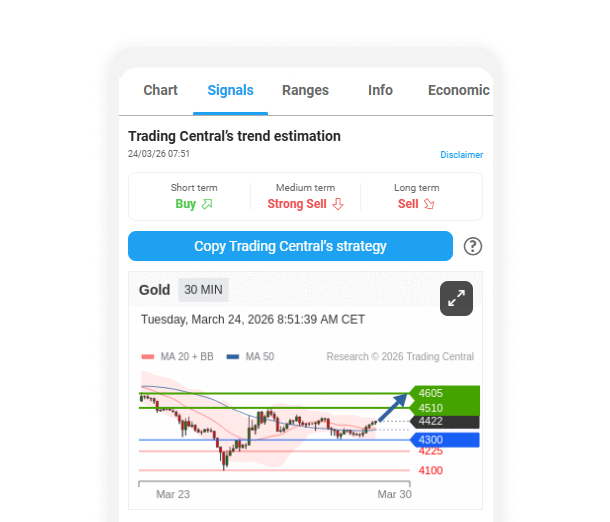
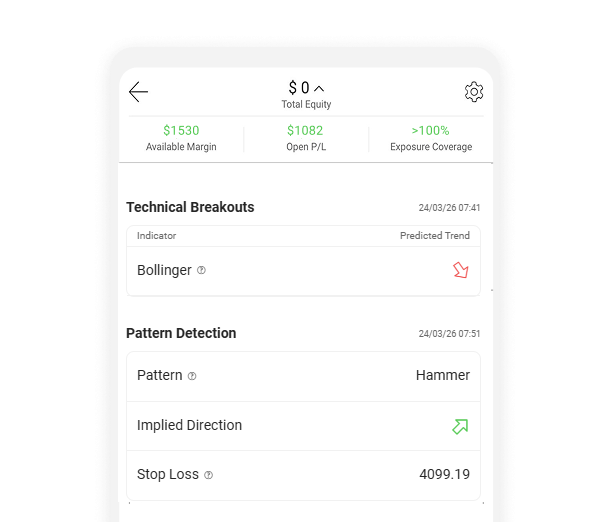
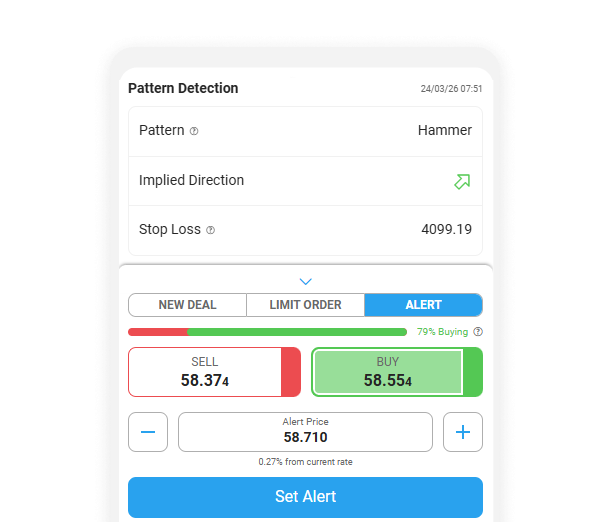


Stay up to date with changes and take advantage of opportunities as they occur.
Powered by Trading Central.
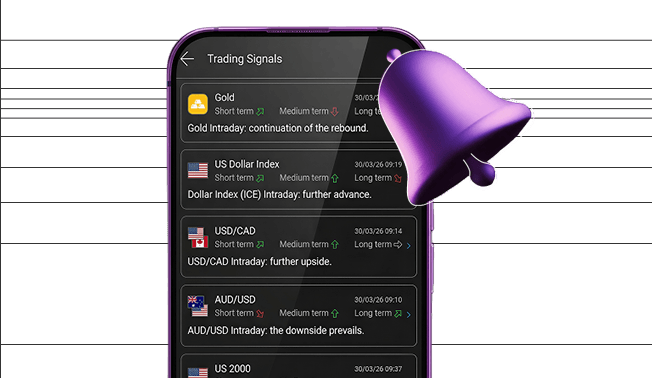


Trading signals have become essential tools for market participants looking to optimize their trading decisions. Whether you’re a beginner or an experienced trader, understanding what trading signals are and how to effectively implement them can significantly enhance your trading strategy.
Trading signals can come from various sources: Technical indicators, manual analysis, Automated systems & signal providers.
At iFOREX, you can customize signal alerts and receive push notifications for specific instruments you select.
Types of Trading Signals
Short-term signals: Generated for intraday trading or scalping
Medium-term signals: Suitable for swing trading (days to weeks)
Long-term signals: Designed for position trading (weeks to months)
Before implementing any trading signal, it’s crucial to understand how it’s generated. Knowing the methodology helps you assess its reliability and align it with your trading strategy.
Relying on a single signal might lead to false positives. Combining multiple signals or confirming them with other indicators often provides more reliable insights into market movements.
Trading signals should not be followed blindly. Always consider the broader market context, including economic news, market sentiment, and volatility levels.
Before incorporating signals into your live trading, test them through backtesting or demo accounts to evaluate their effectiveness.
Even the most accurate signals can sometimes fail. Always implement proper risk management techniques, including setting stop-loss orders and determining position sizes.

Maximize your trading potential with flexible leverage.

Access the market whenever it suits you.

Advanced charting tools and ai-powered insights.

Stop loss and take profit features to secure your trades.

Trading signals are indicators or suggestions that highlight potential opportunities in the market, such as when to enter or exit a trade. They are typically based on technical analysis, market trends, or data-driven models.
Trading signals can be created using technical indicators, manual chart analysis, automated algorithms, or by professional signal providers. Each method uses different data points and strategies to identify potential market movements.
Yes, trading signals can help beginners identify potential opportunities more easily. However, they should be used alongside basic market knowledge and risk management, rather than as a replacement for understanding how trading works.
No trading signal is guaranteed to be accurate. While some signals can provide useful insights, market conditions can change quickly, and signals may not always perform as expected.
Relying solely on trading signals is not recommended. It’s important to combine signals with your own analysis, market context, and risk management strategy to make more informed decisions.
Trading signals can vary by timeframe (short-term, medium-term, long-term) and by market (forex, shares, commodities, cryptocurrencies). Each type is suited to different trading styles and strategies.
You can evaluate trading signals by using demo accounts or backtesting strategies against historical data. This allows you to assess their performance without risking real funds.
When choosing a signal provider, consider their track record, transparency, user feedback, pricing structure, and whether they offer educational support to help you understand their signals.
Yes. As you gain experience, you can develop your own signals using technical indicators, market research, and patterns that align with your personal trading strategy.
Common mistakes include over-relying on signals, following too many signals at once, ignoring timeframes, trading emotionally, and neglecting risk management.





















Your IP address tells us you are visiting from an EEA member state and therefore you should go to iFOREX Europe, the trading name of iCFD Ltd., a Cyprus investment firm, which operates under EU regulations and product intervention rules.
Please choose: